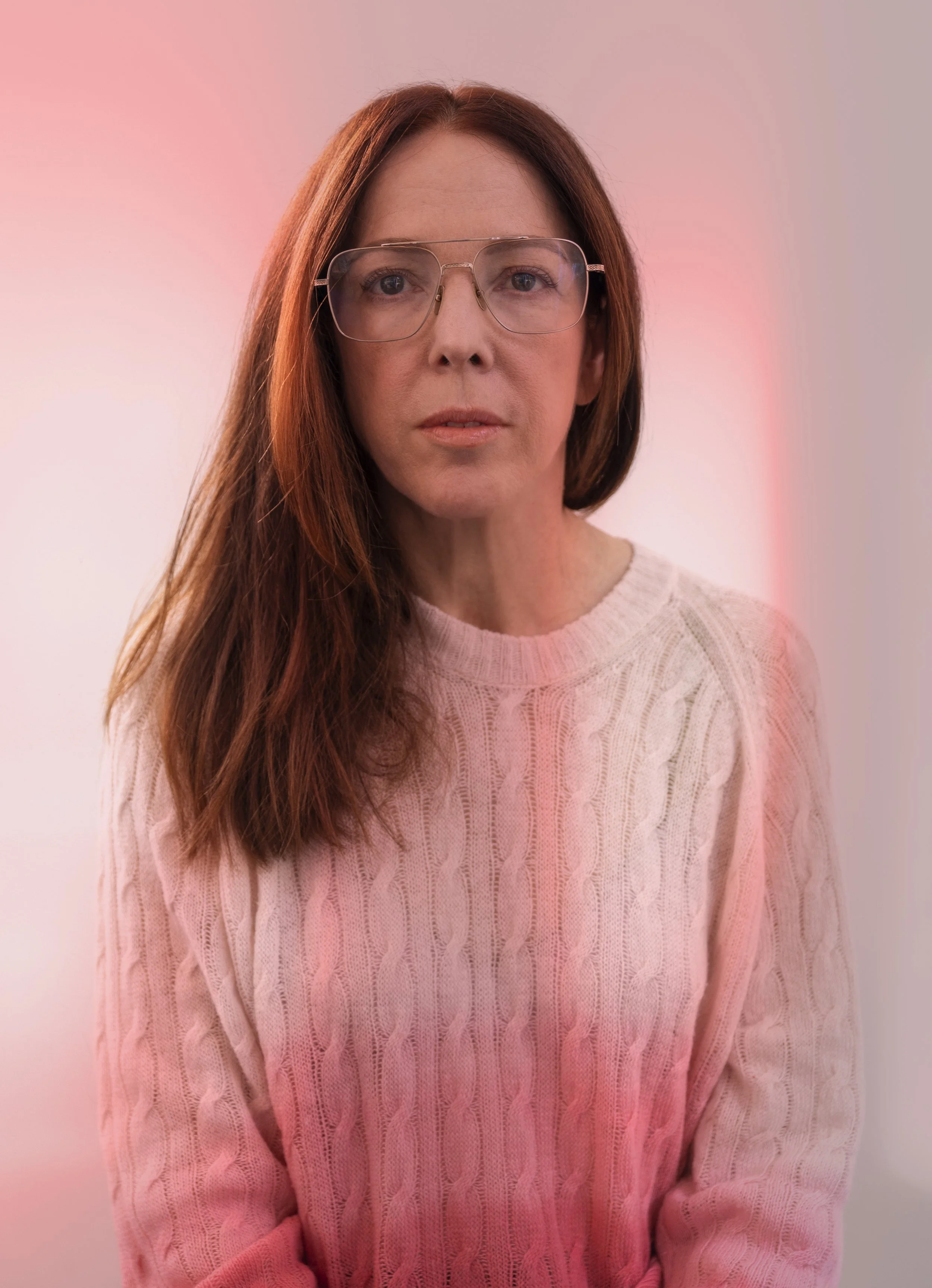
Photograph - Kade Stenders
Lisa Stonham is a visual artist based on unceded Gadigal Land. Her practice considers the potential of photography to move beyond the “decisive moment” and convey experiences that unfold over time. Examining moments when time and space feel unsettled, recursive and open-ended, Lisa investigates how photography might suspend, fracture, or reconfigure temporal experience.
Through installation and sculpture, her work challenges the parameters of photography by extending it into physical space, blurring the boundaries between artwork, environment and viewer. The ‘photographed’ is positioned as a continuum that develops through embodied experience in the present. Rethinking the photograph as continuous and evolving, her work explores the materiality of light, the plasticity of time, and the invisible presences that shape experience.
In 2025, she completed a Master of Fine Arts at National Art School, earning the Standish & Co. Scholarship, the Prix Yves Hernot Award of Merit, and the Harvey Galleries Exhibition Prize. In 2024, she received the Perth Centre for Photography’s (PCP) Contemporary Landscape Prize.
Solo exhibitions include Inside the Empty Interval (2026), Photo-Access, Canberra; Everyday Wonder (2024); Looking Forward, Looking Through … Future Perfect (2023), Five Walls Gallery and Project Space, Melbourne; and Conversations with My-Self and Others (2022), M16 Artspace, Canberra.
Lisa is a 2026 National Photography Prize finalist, presenting a large-scale, site-specific work at Murray Art Museum Albury (MAMA). She has also been a finalist in the Mullins Conceptual Photography Prize, the Canberra Contemporary Photographic Prize, the PCP Iris Award, the Fisher’s Ghost Art Award, the Ravenswood Women’s Art Prize and the Sunshine Coast Art Prize.
Her work has been profiled in The Sydney Morning Herald, reviewed in The Canberra Times, and is held in collections across Australia and Europe.